Cest Lavie Villa

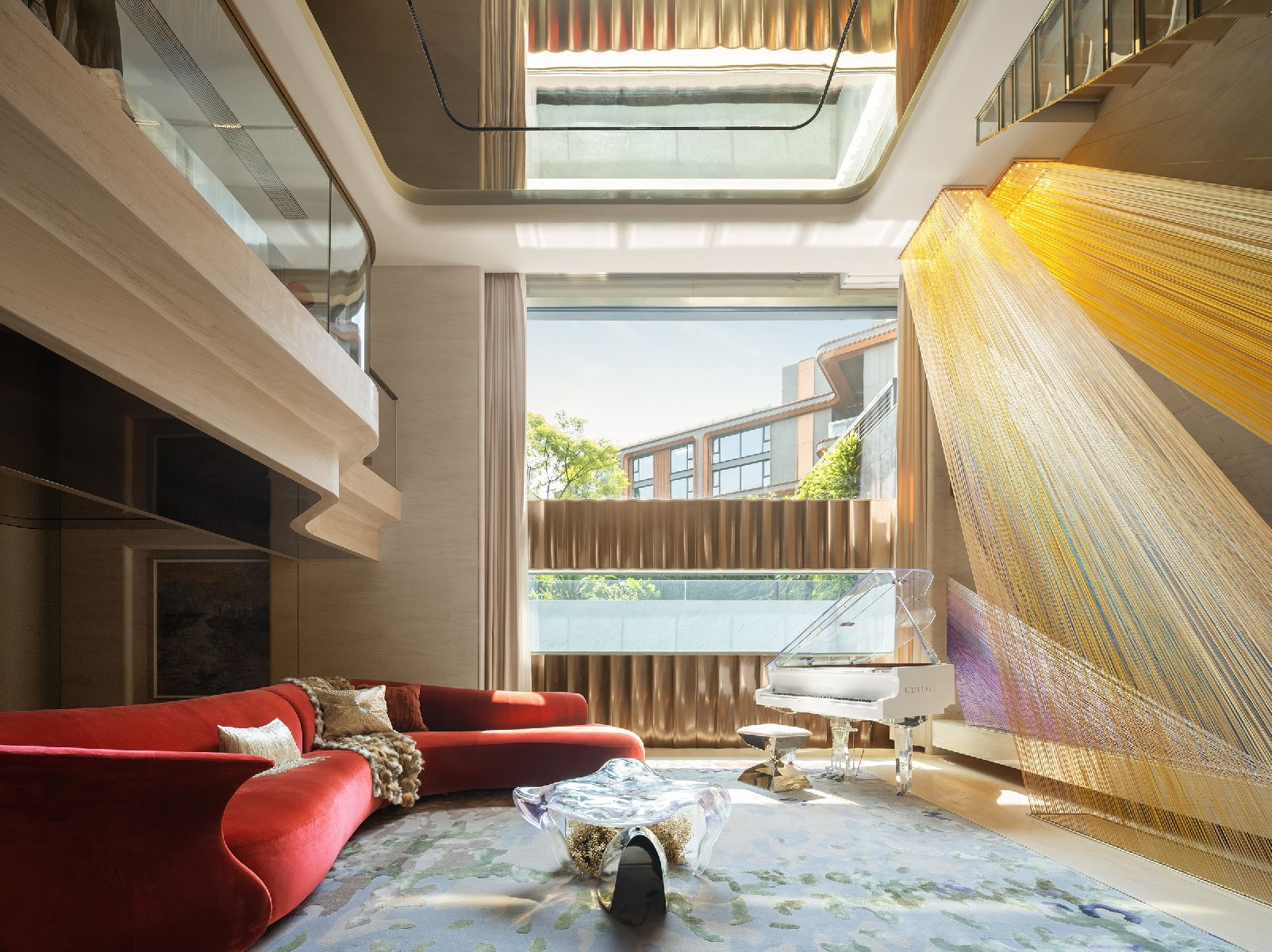
Guided by the theme “Boundless Light,” the project blends Chengdu’s local culture (Shu Embroidery texture, Sichuan Opera colors) with contemporary French romance. Natural light and floor-to-ceiling windows enhance spatial flow, merging art with daily life.

This design extracts local elements such as Shu Embroidery and the color palette inspired by Sichuan Opera’s Face-Changing technique.

Compared with designs of the same type, this project has three advantages. First, Chinese and Western cultures integrate through the aesthetics of material forms and natural light. Second, it absorbs the local cultural atmosphere and forms a unique park-city lifestyle scene that conforms to the project’s positioning. Third, it adopts environmentally friendly materials to further refine the production of installation materials.

Natural light and floor-to-ceiling windows enhance spatial flow.

Drawing inspiration from the integration of Chengdu’s local culture and international aesthetics, this design extracts local elements such as Shu Embroidery and the color palettes of Sichuan Opera Face-Changing. It uses the element of light to adorn the shape of the interior space and its decorations, ultimately presenting an eclectic style infused with contemporary French romance.

The design integrates art with everyday living.

Material application centers on environmental protection. In the creation of art installations and wall paintings, aged pigments and waste materials are used for crafting. No special technologies are involved, and the design effect is mainly presented through the combination of material properties and the element of light.

Eco-friendly practices are applied through the use of aged pigments and waste materials for installations and murals.

This project is located in Jinjiang District, Chengdu, Sichuan Province. As an emerging commercial city, Chengdu also boasts profound local cultural heritage. The project integrates the texture of Shu Embroidery stitches and the color relationships of Sichuan Opera Face-Changing masks, and combines them with the theme of “Boundless Light” to present itself through contemporary artistic approaches.

Light is used as an element to enrich the form of interior spaces and their decoration.

First, the style is relatively high-risk in the domestic real estate market. Second, as a remote project with a tight construction schedule, the implementation of the installation art encountered twists and turns, and there was also overlapping work. Finally, in the creation of the artistic wall paintings, all parties involved had differences in their understanding of art.

In this project, Chinese and Western cultures are integrated through the aesthetics of material forms and natural light.

Party A and Party B worked together to implement the style effect in accordance with the initial design plan. Through timely communication and a commitment to artistic pursuit, the designer resolved the issues regarding the implementation of the installations. Regarding the disputes over the wall paintings, the designer made revisions personally and completed the works using old pigments and materials.

The spatial layout presents an eclectic style with a contemporary French romantic atmosphere.

This project takes “Boundless Light” as its core, draws on the essence of local culture, and integrates international aesthetic perspectives to create a poetic residence that combines Chinese and Western characteristics. The design expands the visual dimension through flowing spatial vocabulary; the indoor floor-to-ceiling windows erase spatial boundaries; and the multi-functional private spaces cater to diverse living scenarios. Overall, it integrates art with life and seeks a balance between functionality, aesthetics, and emotion.

The project was designed by MTO Design.

In terms of green sustainability, this project primarily practices the concept of environmental protection through material selection. In the creation of art installations and wall paintings, based on the logic of environmental protection, aged pigments and waste materials are used for production. Meanwhile, during the manufacturing process of the project’s installation materials, environmentally friendly materials are adopted to further advance the implementation, and no other additional sustainability measures are involved.

Project Name: Cest Lavie Villa
Location: Chengdu, China
Design Company: MTO Design
Completion time: August, 2025
Project area: 478 square meters
Client Name: GR GROUP
Photographer: 4U STUDIO-Zou Fenghan

READ MORE

error:
en_USEnglish