El Arca: Building with the Landscape

A timber pavilion in Panama’s coffee highlands, where handcrafted construction and cultivated landscape encounter the cloud forest of Volcán Barú.

El Arca is a private residential pavilion designed by Mallol in Nueva Suiza, Chiriquí, Panama. The site is located at over 2,000 meters above sea level on the slopes of Volcán Barú, in a highland region celebrated for the production of Geisha coffee, one of the most exclusive specialty coffee varieties in the world, which thrives directly in this territory.

The building’s design is inspired by the form of a dry leaf that has fallen to the ground.

The building was completed in close collaboration with local craftsmen Amílcar and Abdiel Rodríguez, whose technical expertise in timber construction shaped the project from structural framing to finish.

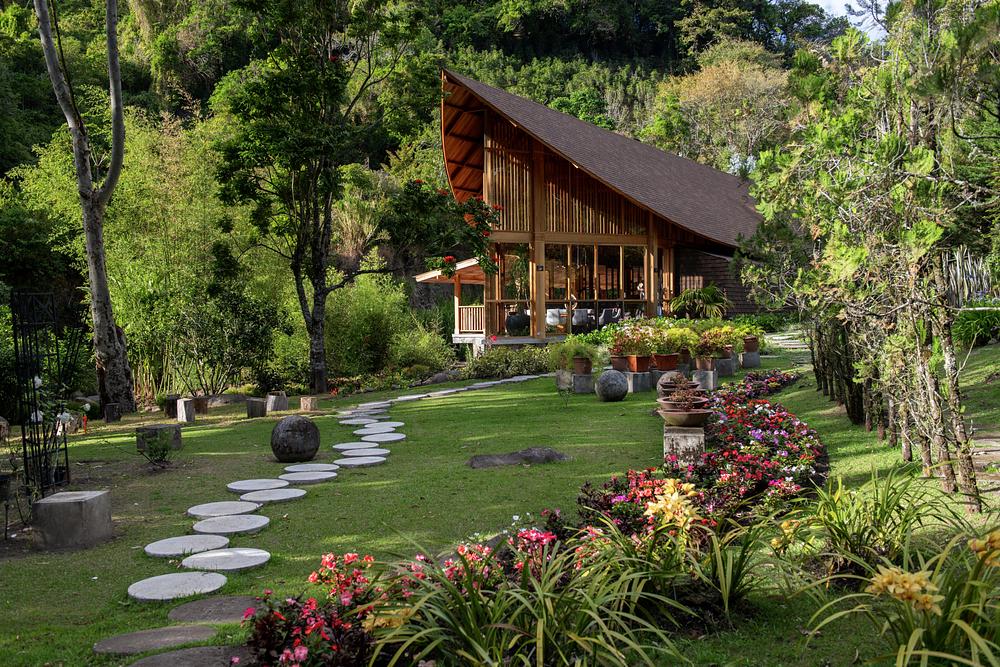
The pavilion is organized beneath a single curved roof that spans the entire program. This overarching structure provides continuous shelter from the frequent rain and shifting climate of the highlands, establishing a strong architectural presence within the landscape.

The sound of the mountain river flows through every interior space, creating a continuous acoustic connection with nature.

Its profile draws inspiration from the form of a dry leaf fallen to the ground, a reference that gives the project its name (The Ark) and defines the distinct curved arc visible through the surrounding forest canopy. Living, dining, and resting areas are arranged on a single level beneath it, oriented toward the gardens, the river, and the surrounding cloud forest. The interior volume is defined by the exposed timber structure above, which remains visible throughout, reading as both the building’s skeleton and its primary surface.

The continuous roof structure provides shelter from the region’s frequent rainfall.

All primary materials were sourced from the site and its immediate territory. The structural frame, wall cladding, floors, and exposed ceiling are constructed in cedar, a timber native to the property. The decision to harvest wood directly from the land eliminates external supply chains and ensures that the material character of the building reflects the territory it occupies. Joinery was executed entirely by hand by craftsmen from the Chiriquí highlands, whose familiarity with cedar informed every connection and surface.

The interior is defined by an exposed timber structure that remains visible overhead.

The exterior envelope is finished in shingle, maintaining material continuity with the timber structure while responding to a climate defined by rain, mist, and daily temperature shifts. Pathways, terraces, and ground surfaces are formed in stone extracted locally.

The building forms a distinctive curved silhouette that emerges through the surrounding forest canopy.

During the design process, a massive boulder discovered on-site was intentionally preserved rather than removed; instead, the pavilion was built around it. The rock now sits within an interior garden at the center of the structure, enclosed by floor-to-ceiling cedar and glass, surrounded by endemic plants, and lit from below. It remains visible from the riverside through full-height glazing. This decision shaped the organizing principle of the project: rather than clearing the site to impose a predetermined layout, the building was configured to accommodate what was already there.

All primary building materials were sourced from the project site and its surrounding area.

The exterior landscape extends this respectful approach. Cultivated gardens integrate endemic species with intentional planting across the site, creating a sequence of arrival that begins before the building is reached.

A mountain river runs along the edge of the property without being redirected or enclosed. Its sound is present throughout every interior space, functioning as a continuous acoustic connection between the building and its natural context.

The exterior landscape design continues the project’s nature-sensitive approach.

By sourcing cedar from the property, extracting stone locally, and employing solely craftsmen from the Chiriquí highlands, the project’s construction model kept the entire supply and labor chain within the region. This approach kept the economic activity generated by the project within the territory and ensured that the technical knowledge embedded in the building remains with the community that built it.

The primary structure, wall cladding, flooring, and exposed ceiling are all crafted from cedar timber.

See more images in the gallery below


Project name: El Arca
Location: Nueva Suiza, Chiriquí, Panamá
Architects: Mallol
Design team: Mallol
Project completion date: 2024
Construction area (sqm): 220 sqm
Photographers: Alfredo Maiquez and Pepe Calavera
Carpentry and Construction Execution: Amílcar Rodríguez and Abdiel Rodríguez

READ MORE

error:
en_USEnglish