Hidden Spa – Water Hope: A Deserted Coastal Dune Transformed into a Tropical Wellness Oasis

A hidden oasis shaped by water, landscape and climate
Nestled within the coastal sand dunes of Bãi Dài, Cam Ranh, Vietnam, Hidden Spa – Water Hope is a spa and mud bath complex designed by IDEE Architects as an extension of the landscape rather than an object placed upon it. Instead of imposing a new form onto the site, the project embraces the natural topography, allowing the architecture to disappear beneath the dunes while creating a calm environment dedicated to wellness and contemplation.

Through the integration of water, lush vegetation, and carefully designed microclimates, the once-barren landscape has been gradually transformed into a tranquil tropical oasis.

The site presented an extreme natural environment. Strong coastal winds, intense tropical sunlight, and barren sand dunes offered little shade or vegetation. Rather than resisting these conditions, the architects sought to transform them by introducing water, planting and carefully controlled microclimates.

The architects chose to let the building merge seamlessly with the natural sand dunes, allowing the architecture to disappear into the surrounding landscape.

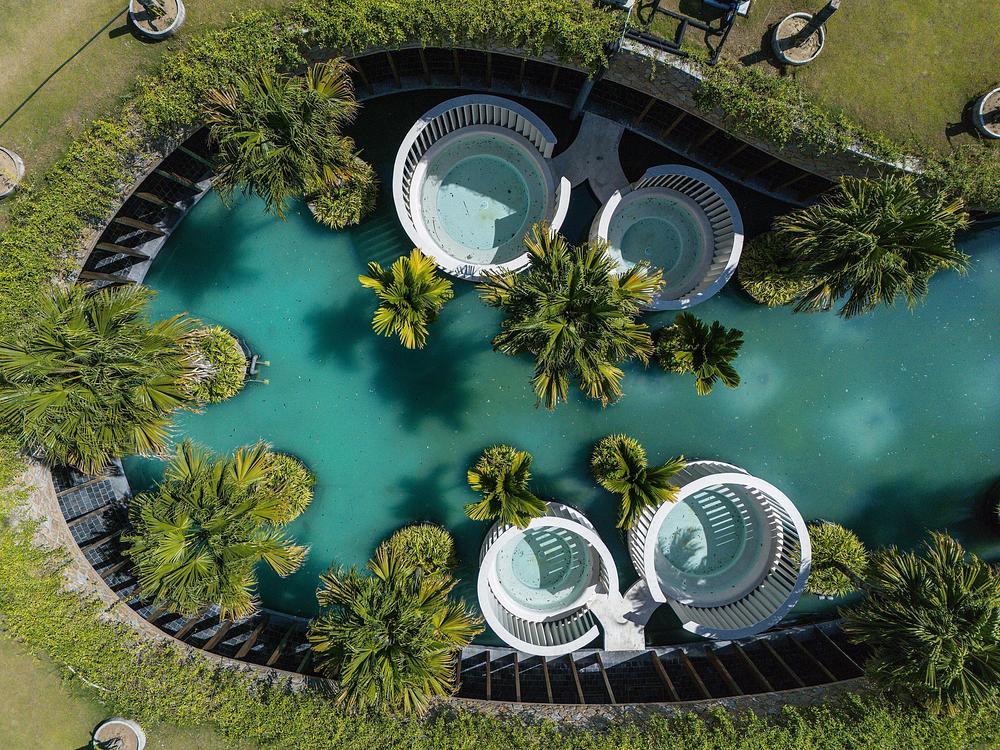
At the heart of the project is a central water courtyard that serves as both the spatial and environmental core of the spa. Reflecting pools, planted islands and shaded walkways create a sequence of spaces where temperature, humidity and light gradually shift as visitors move through the complex. Water is not treated as a decorative element but as environmental infrastructure, cooling the surrounding spaces while enhancing the sensory experience.

At the heart of the project is a water courtyard, serving as both the central gathering space and the project’s primary environmental feature.

The building is organized as a continuous, curved structure that embraces the courtyard. Its roof follows the existing sand dunes, allowing visitors to walk across a planted landscape while minimizing the architecture’s visual impact. By adapting to the natural terrain rather than flattening it, excavation was significantly reduced, preserving the relationship between architecture and landscape.

Reflecting pools, planted islands, and shaded pedestrian pathways create a sequence of spaces where temperature, humidity, and natural light gradually change throughout the visitor’s journey.

Material selection was guided by durability, locality and environmental performance. Locally sourced stone, timber and bamboo form a restrained architectural palette that responds naturally to the tropical climate. Thick stone walls provide thermal mass, while open corridors and bamboo ceilings promote natural ventilation. A vegetated roof further reduces heat gain, while rainwater collected from the sloping roof is reused for landscape irrigation.

Rather than simply moving from one space to another, visitors experience a carefully choreographed transition of atmosphere designed to encourage relaxation and sensory well-being.

One mature tree standing on the dune before construction became a symbolic anchor for the entire project. Rather than removing it, the design evolved around its presence. Over time, the introduction of water, shade, and vegetation has gradually transformed the once-barren landscape into a small oasis where architecture and nature continue to grow together.

Locally sourced natural stone, timber, and bamboo were selected for their ability to respond naturally to the tropical climate while creating a warm and timeless architectural character.

Hidden Spa – Water Hope reflects IDEE Architects’ broader design philosophy: architecture should emerge from its context rather than dominate it. Instead of relying on iconic form, the project focuses on atmosphere, climate and human experience. It demonstrates how architecture can regenerate a fragile landscape while creating meaningful spaces for rest, healing and connection with nature.

Thick stone walls provide thermal mass to stabilize indoor temperatures, while open corridors and bamboo ceilings maximize natural ventilation for year-round comfort.

Recently awarded the Architizer A+Awards 2026 Jury Winner in the Spa & Wellness category, Hidden Spa – Water Hope represents a contemporary interpretation of tropical architecture, where sustainability is achieved not through technological complexity but through a thoughtful dialogue among landscape, climate, and architecture.

Rather than relying on iconic forms or complex technologies, the project creates meaningful spaces through a deep understanding of climate, landscape, and the human experience.

Hidden Spa – Water Hope
Architecture Hidden Within Nature Instead of dominating the landscape, Hidden Spa – Water Hope is seamlessly embedded beneath Vietnam’s coastal sand dunes, allowing architecture and nature to coexist.
A Harsh Landscape Reimagined Strong coastal winds, intense tropical sunlight, and barren dunes were transformed into a lush wellness oasis through water, vegetation, and carefully designed microclimates.
Water as Environmental Infrastructure Reflecting pools and water courtyards do more than enhance aesthetics; they naturally cool surrounding spaces and create a calming sensory experience.
Roof That Becomes the Landscape The planted roof follows the natural contours of the sand dunes, minimizing excavation and reducing the building’s visual impact on the site.
Climate-Responsive Tropical Design Thick stone walls, open-air corridors, bamboo ceilings, and natural ventilation work together to improve thermal comfort while reducing energy demand.
Sustainable Material Strategy – Locally sourced stone, timber, and bamboo were selected for their durability, low environmental impact, and compatibility with the tropical climate.
Nature-Led Design Approach – A mature tree that stood on the site before construction became the project’s centerpiece, with the entire design evolving around its preservation.
Integrated Water Management – Rainwater collected from the sloping roof is reused to irrigate the landscape, supporting long-term environmental sustainability.
Architecture That Regenerates the Landscape – Rather than simply occupying the site, the project restores a fragile coastal ecosystem by introducing shade, water, and vegetation.
Designed for Wellness Through Atmosphere – Hidden Spa focuses on light, temperature, humidity, sound, and movement, creating a restorative environment that engages all the senses.
Contemporary Tropical Architecture – The project demonstrates that sustainable architecture can be achieved through passive design strategies and a deep understanding of climate, rather than relying on complex technologies.

See more images in the gallery below


Project Name: Hidden Spa - Water Hope
Location: Bãi Dài, Cam Ranh, Khánh Hòa Province, Vietnam
Status: Completed
Completion Year: 2025
Gross Floor Area: 3,000 m²
Client: Amiana Cam Ranh

Design Team
Architect
: IDEE Architects
Principal Architects: Tran Ngoc Linh, Nguyen Huy Hai
Architecture Team: Tham Duc Hung, Nguyen Dac Nguyen, Vu Thi Thanh Tam
Structural Engineer: Nguyen Quy Nam
MEP Engineer: Nguyen Trong Hung
Landscape Design: IDEE Architects
Interior Design: IDEE Architects (nếu đúng)
Photography: ©IDEE Architects

READ MORE

error:
en_USEnglish